
A tree can look healthy from the sidewalk while a few problem branches create risks above your home, walkway, or yard. Regularly checking the canopy helps you notice dead wood, branches rubbing together, storm damage, and growth extending too far. Some signs call for prompt attention; others are best assessed by a trained professional. Here’s what to look for and how to decide when pruning is the safer choice.
Dead or Declining Branches
Dead branches often have no leaves when nearby branches are in leaf, brittle twigs, or bark that is peeling or missing. In winter, leaf loss alone is not a reliable sign, so look for several clues together. A branch that breaks easily or shows no buds in spring may also be declining. Dead wood can fall without warning, especially when it hangs over a roof, driveway, or place people gather.
Do not test a suspicious branch by pulling or shaking it. Large limbs can shift, and dead wood may break unexpectedly. From the ground, note where the branch sits and whether it is above a structure or frequently used area. A tree-care professional can assess whether pruning is appropriate and remove the branch using a method that protects the trunk and nearby growth.
Crossing and Rubbing Branches
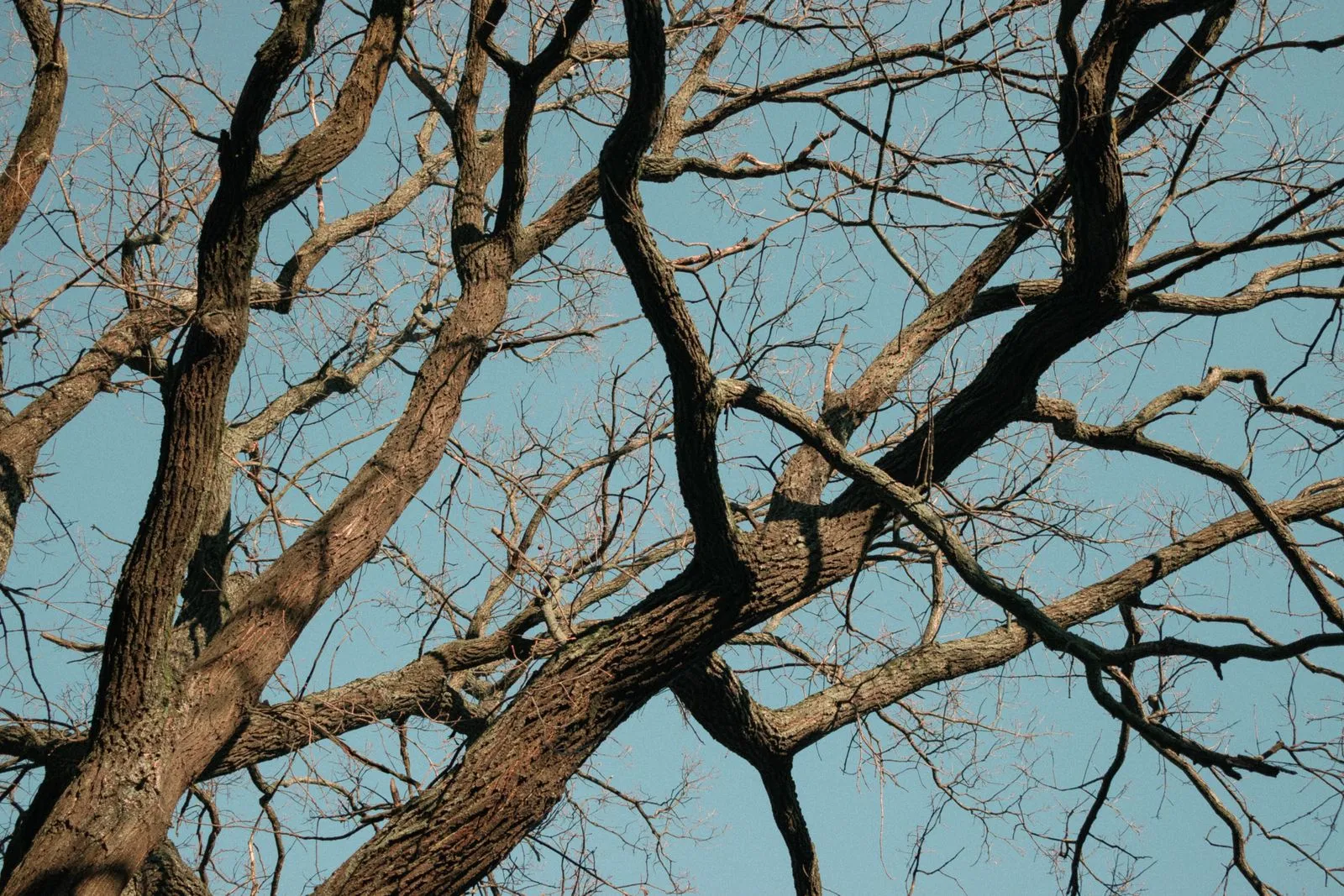
When two branches touch or rub, their movement can wear away bark. The resulting wounds may expose wood and leave the tree more vulnerable to decay. Look for paired branches that grow inward, cross through the canopy, or press against each other. A narrow, crowded area may also block light and airflow, though appearance alone does not determine which branch should be removed.
Avoid cutting one side simply because it seems to be in the way. Removing the wrong limb can leave a large wound or unbalance the canopy. A professional can identify which branch is better positioned to remain and make a clean cut at the proper location. This is especially important for large branches or those high in the tree.
Storm Damage and Weak Attachments
After strong winds, heavy snow, or ice, check from a safe distance for hanging limbs, fresh splits, broken tips, and branches bent into an unusual position. A crack where a branch joins the trunk can signal a weak attachment. Also look for bark torn from the trunk or a limb that has dropped but remains caught in the canopy. These hazards may be unstable even when they appear motionless.
Keep people and pets away from the area beneath damaged branches. Do not climb the tree, use a ladder, or try to free a hanging limb with a pole or rope. If a branch is near a power line, stay clear and contact the utility. For other serious damage, arrange an assessment by a qualified tree-care professional before attempting cleanup.
Branches Reaching Too Far
A long branch extending over a roof, driveway, sidewalk, or neighboring property deserves attention when it appears heavy, weakly attached, or crowded by other growth. The same applies to branches that obstruct a clear path or repeatedly contact a building. A branch’s length alone does not mean it must be removed; its condition, attachment, and position all matter.
Pruning should preserve the tree’s natural shape and avoid removing too much canopy at once. Do not top a tree by cutting back its upper branches to stubs; that can create weak regrowth and lasting damage. If an overextended limb is large, high, or close to a structure, ask a professional to evaluate it and recommend a careful approach.
Dead, rubbing, damaged, and overextended branches are useful warning signs, but deciding what to cut requires care. Stay on the ground, keep clear of unstable limbs, and seek professional help for elevated or substantial branches. For a local assessment, contact Canopy & Crown to discuss your tree’s condition and next steps.